
Fire & resilience
Is Light Gauge Steel Fire-Resistant? LGS for California Fire Rebuilds
Light gauge steel is non-combustible: it does not ignite, burn, or feed a fire, and it is unaffected by the wind-driven embers that destroy most homes in California wildfires. That makes load-bearing LGS framing one of the strongest structural choices for rebuilding in fire-prone areas like the Eaton and Palisades burn zones.
TESH Group6 min read
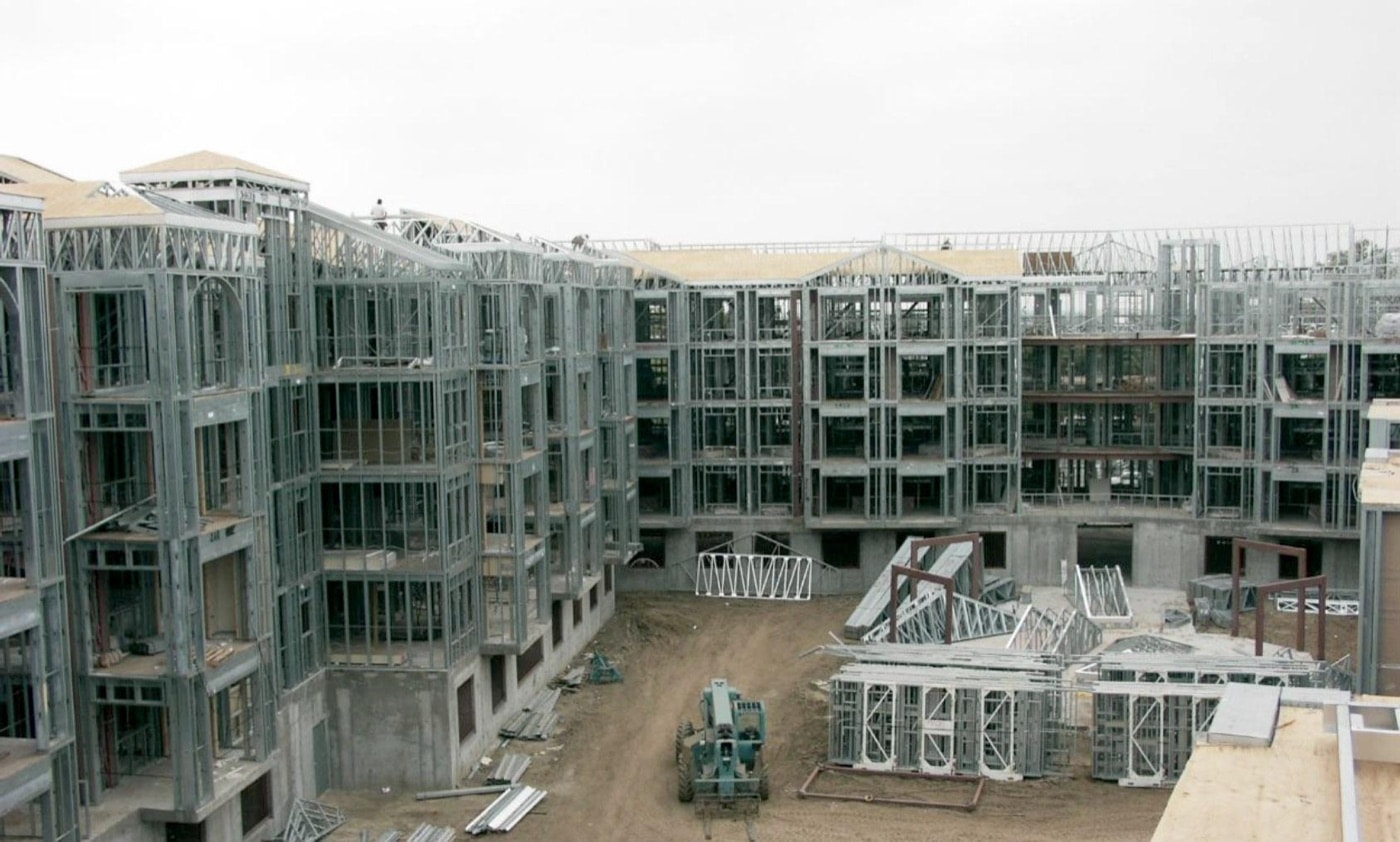
After the 2025 Los Angeles-area fires, thousands of California homeowners are rebuilding with one question front of mind: how do we build something that will not burn the same way again? Light gauge steel framing is a direct, structural answer to that question.
What does non-combustible actually mean?
Steel is non-combustible, meaning it does not catch fire, does not contribute fuel, and does not spread flame. In a wildland-urban interface fire, most homes are not lost to a wall of flame but to wind-blown embers that land on and in combustible framing, decking, and vents and smolder into ignition. A non-combustible light gauge steel frame removes the framing itself from that fuel chain.
Most homes lost in California wildfires are ignited by wind-driven embers, not direct flame contact. Non-combustible framing attacks that exact failure mode.
Does that make a steel-framed house fireproof?
No building is fireproof, and we are careful not to claim otherwise. Fire resilience is a whole-assembly outcome: framing, sheathing, cladding, roofing, windows, vents, and detailing all matter, and so does defensible space around the home. What light gauge steel does is take the primary structure out of the combustible category, so the frame is not the thing carrying the fire. Pairing an LGS frame with non-combustible cladding, ember-resistant vents, and Chapter 7A-compliant assemblies produces a genuinely hardened home.
Why is light gauge steel a good fit for California fire rebuilds specifically?
- Non-combustible structure that directly addresses ember ignition, the dominant wildfire loss path.
- Compatible with California's Chapter 7A wildfire-hardening requirements for the surrounding assemblies.
- Dimensionally stable and pest- and rot-proof, so the rebuild lasts.
- Prefabrication shortens the rebuild timeline, which matters when families are displaced and rebuilding at scale across a burn zone.
- Strong seismic performance, because a fire rebuild in Southern California still has to be an earthquake-ready home.
Can it look like a normal home?
Yes. Light gauge steel is the structure behind the walls; the finished home looks like any other architecturally designed house. The same LGS system supports custom homes, ADUs, and multifamily housing, so a fire rebuild is not a compromise on design, it is an upgrade to the bones of the building.
Frequently asked questions
- Will a light gauge steel house burn down in a wildfire?
- The steel frame itself is non-combustible and will not ignite or spread fire. Overall survival still depends on non-combustible cladding, roofing, ember-resistant vents, and defensible space, but a light gauge steel frame removes the structure from the fuel chain that drives most wildfire losses.
- Is light gauge steel allowed for fire rebuilds in California?
- Yes. Light gauge steel is a code-compliant structural system and pairs well with California's Chapter 7A wildfire-hardening requirements for cladding, vents, and assemblies in fire-prone zones.
- Is steel framing good after a fire because it does not need to dry out?
- Steel does not absorb water, rot, or grow mold, so unlike wood it does not need to dry before close-in and is not degraded by moisture during construction, which helps keep a rebuild on schedule.
Build with light gauge steel