The factory
From Master Coil to Finished Module: How the Owned Steel Factory Works
TESH Group owns its off-site steel factory through Cal Steel Modular. The production chain runs from master steel coil, to slitting, to roll-forming into studs and tracks, to panelizing into wall, floor, and roof systems, which either ship flat for on-site assembly or are built up into complete volumetric modules. Owning that chain controls lead time, quality, and cost.
TESH Group5 min read
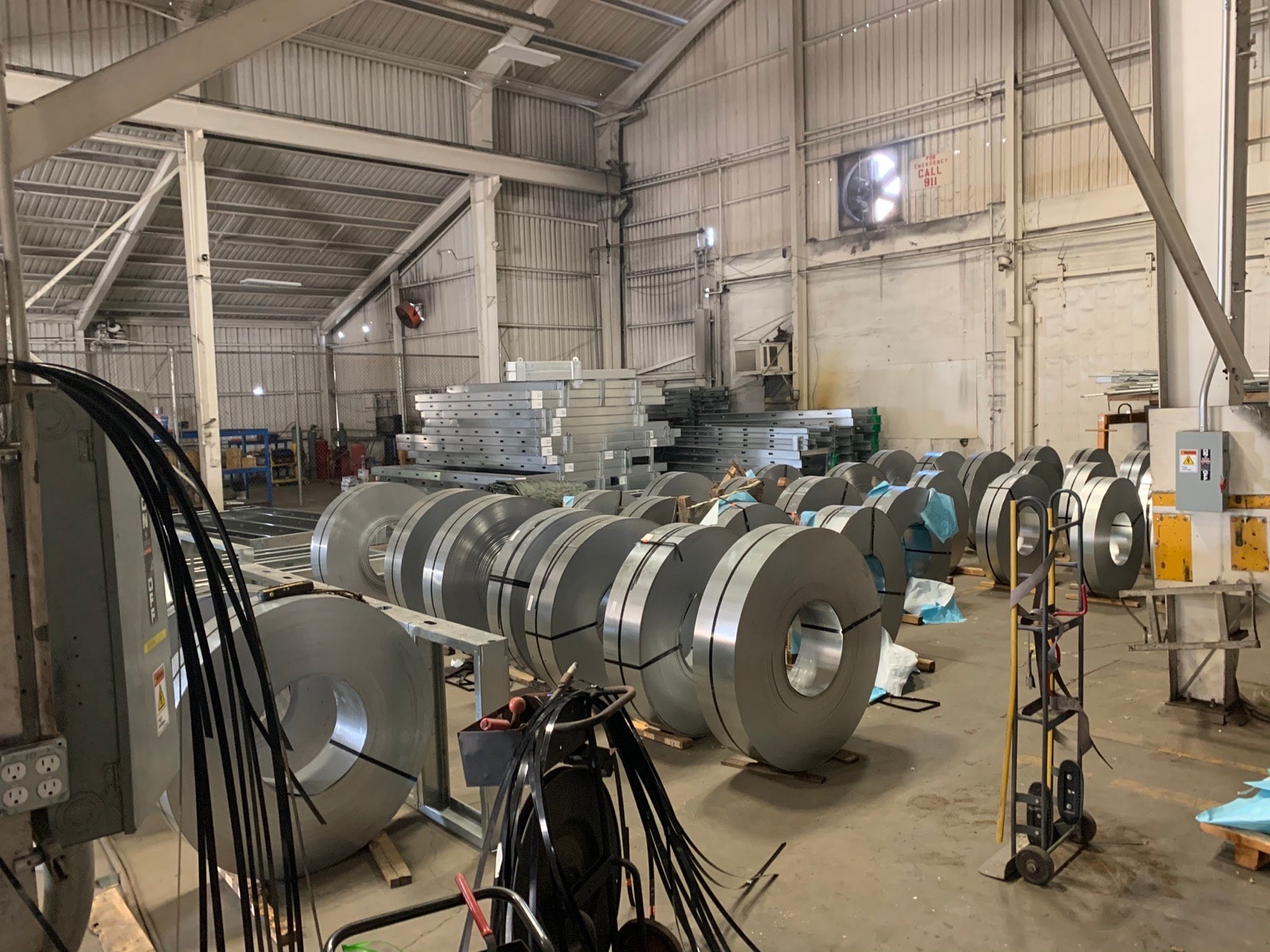
Most builders buy their steel components from a supplier. We make ours. Through Cal Steel Modular, the platform owns and operates the off-site factory, which means one company controls the path from raw steel to a finished panel or module.
Master coil to finished output, step by step
- 01Master coil: large coils of galvanized steel arrive as the raw input.
- 02Slitting: coils are slit to the precise widths the profiles require.
- 03Roll-forming: the slit steel is cold-formed into structural studs, tracks, and joists.
- 04Panelization: those members are assembled into wall, floor, and roof panels.
- 05Two outputs: panels ship flat for on-site erection, or are built up into complete volumetric modules that are trucked and set on site.
Why owning the factory matters
- Lead time: production is scheduled around the project, not a third-party supplier's queue.
- Quality: components are made to consistent, factory-controlled tolerances.
- Cost and margin: owning the chain removes markups and protects margin across the platform.
- Capacity: the same owned line feeds every operating company, from ADUs to mid-rise.
Both panels and volumetric modules start from the same owned steel production, so the right method can be matched to each building.
Frequently asked questions
- Does TESH Group own its own steel factory?
- Yes. Through Cal Steel Modular, TESH Group owns and operates an off-site steel fabrication factory that runs from master coil to finished panels and volumetric modules.
- What is roll-forming?
- Roll-forming is the process of cold-forming thin sheet steel into structural shapes such as studs, tracks, and joists by passing it through a series of rollers at room temperature.
- What is the difference between panels and modules from the factory?
- Panels are flat wall, floor, and roof assemblies that ship flat and are erected on site. Modules are complete three-dimensional building sections built in the factory and set on the foundation. Both are produced from the same owned light gauge steel.
Build with light gauge steel